India's Sugar Crisis and Your Teeth: What Every Patient Should Know
India's rising sugar consumption is creating a dental health epidemic. Here's what the latest research says — and what you can do to protect your smile.
India's relationship with sugar is changing — and not for the better. Processed foods, sweetened beverages, and ultra-refined snacks have become everyday staples across age groups. Health authorities are now sounding the alarm: India's growing sugar intake is no longer just a metabolic health crisis — it is a dental health epidemic.
The Connection Between Sugar and Tooth Decay
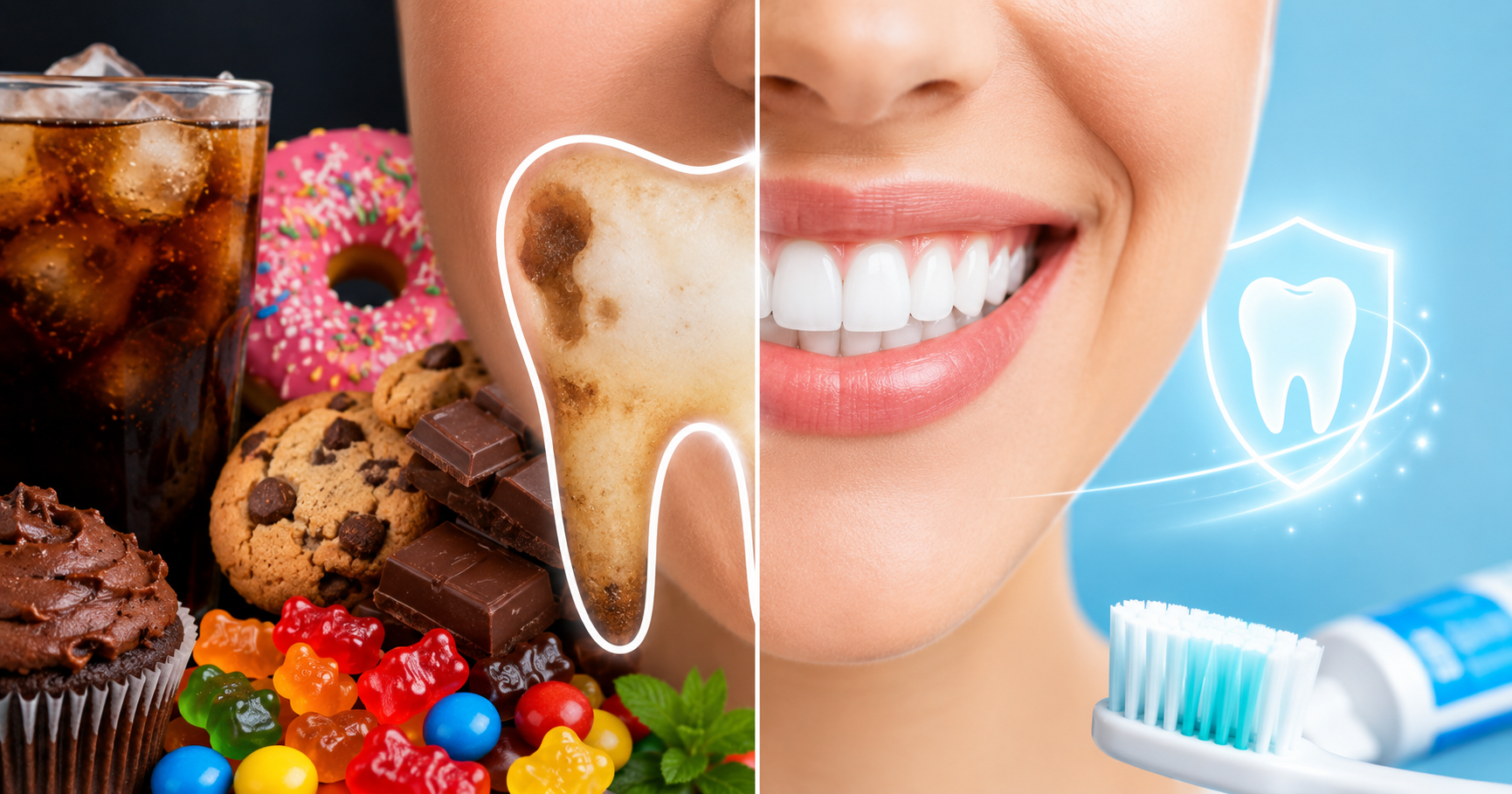
When you consume sugar, the bacteria naturally present in your mouth feed on it and produce acid as a byproduct. This acid attacks your tooth enamel — the hard outer layer of your teeth. Repeated acid attacks over time cause enamel erosion, leading to cavities, sensitivity, and eventually tooth loss if untreated.
The problem isn't just how much sugar you eat — it's how often. Sipping a sugared drink throughout the day exposes your teeth to constant acid attacks, giving enamel no time to remineralise.
Children Are Most at Risk
Dental caries (tooth decay) remains the most common chronic disease in Indian children. Early childhood caries — severe decay in young children — is linked directly to frequent sugar exposure through juices, biscuits, and sweetened milk. Damage to baby teeth affects nutrition, speech development, and the position of permanent teeth.
The Oral Cancer Connection
Beyond decay, poor oral hygiene combined with tobacco and high-sugar diets is a significant risk factor for oral cancer. India accounts for a disproportionately high share of global oral cancer cases. Dental professionals are uniquely positioned to detect early lesions — another reason regular dental check-ups are essential.
Practical Steps to Protect Your Teeth
- Limit sugary drinks — replace sodas and packaged juices with water or coconut water
- Don't snack continuously — give your mouth recovery time between meals
- Brush twice daily with fluoride toothpaste, including before bed
- Floss daily — sugar gets trapped between teeth where brushes can't reach
- See your dentist every 6 months — early decay is invisible to the naked eye but easily caught on X-ray
- Ask about fissure sealants for children — a protective coating applied to back teeth that dramatically reduces cavity risk
A Note from Dentica
Preventive dentistry is the most cost-effective dentistry. A professional cleaning and check-up every six months costs a fraction of a filling, and a fraction of a root canal. Invest in prevention — your future self will thank you.
Book a check-up for yourself or your child at Dentica, Bhubaneswar — walk in knowing more, walk out smiling brighter.