Dental Implants vs Dentures: A Complete 2026 Guide for Indian Patients
Missing teeth? The choice between implants and dentures is one of the most important dental decisions you'll make. Here's everything you need to know before deciding.
Losing a tooth — or multiple teeth — is more than a cosmetic concern. It affects how you eat, speak, and feel about yourself. And the treatment you choose will impact your quality of life for decades. In 2026, patients have better options than ever, but the decision between dental implants and dentures still requires careful thought.
What Are Dental Implants?
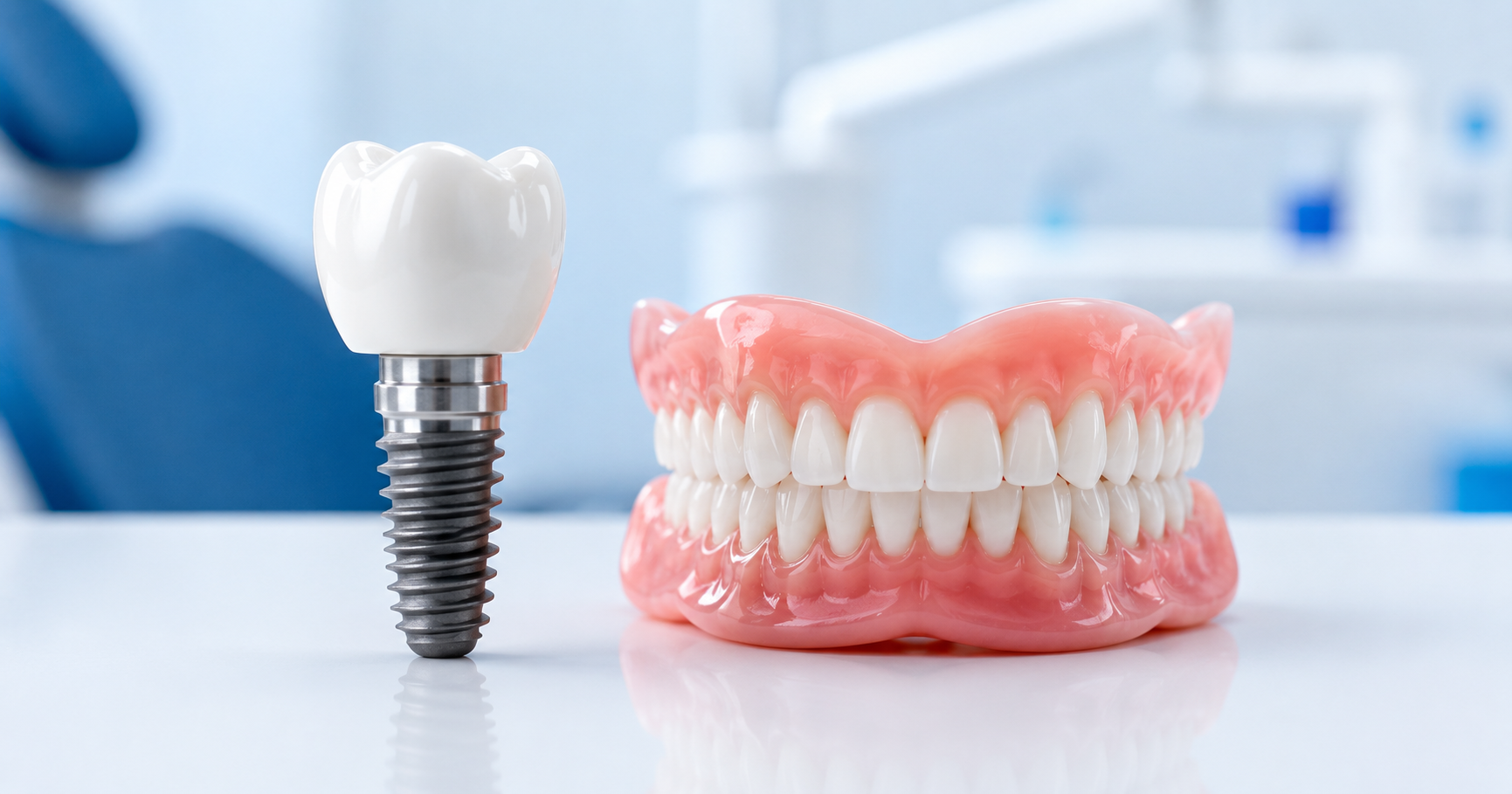
A dental implant is a small titanium post that is surgically placed into your jawbone, acting as an artificial tooth root. Once it fuses with the bone (a process called osseointegration, typically taking 3–6 months), a custom ceramic crown is attached on top. The result looks, feels, and functions like a natural tooth.
What Are Dentures?
Dentures are removable prosthetic teeth that sit on top of your gums. Complete dentures replace all teeth in an arch; partial dentures fill in gaps where some natural teeth remain. They are held in place by suction, clasps, or dental adhesive.
Key Differences
Bone Preservation
This is the most critical difference. When a tooth root is lost, the jawbone beneath it begins to resorb (shrink) because it no longer receives stimulation from chewing. Research shows denture wearers can lose 25–50% of jawbone width in the first few years. Implants prevent this entirely by transmitting chewing forces into the bone — just like natural roots.
Chewing Function
Implants restore approximately 90% of natural chewing force. Dentures reduce chewing efficiency by 50–80%. This affects what you can eat and your nutritional intake over time.
Longevity
Implants last 20–30 years or a lifetime with proper care. Dentures typically need replacement every 5–8 years and require regular relining as the jaw shape changes.
Daily Care
Implants are cleaned exactly like natural teeth — brush, floss, regular check-ups. No adhesives, no overnight soaking.
Who Is a Good Candidate for Implants?
- Adults with good general health
- Adequate jawbone density (or candidates for bone grafting)
- Non-smokers, or those willing to quit (smoking impairs osseointegration)
- Patients with controlled diabetes and blood pressure
Cost Comparison in India
Implants have a higher upfront cost — typically ₹25,000–₹60,000 per implant depending on the brand and clinic. However, when you factor in denture replacements, relines, and adhesive costs over 15–20 years, implants often work out to be more cost-effective in the long run.
Consult Before You Decide
At Dentica, Bhubaneswar, our specialists perform a thorough assessment — including digital X-rays and OPG imaging — to determine the best solution for your specific situation. Book a consultation today.